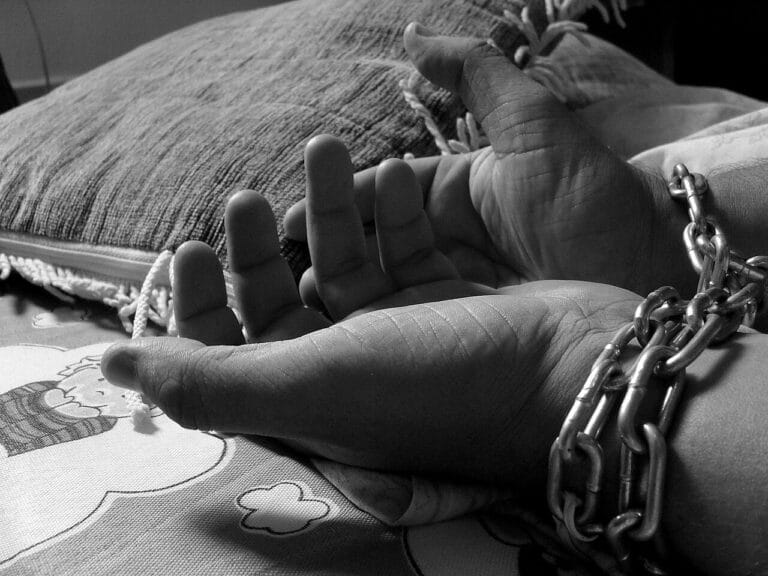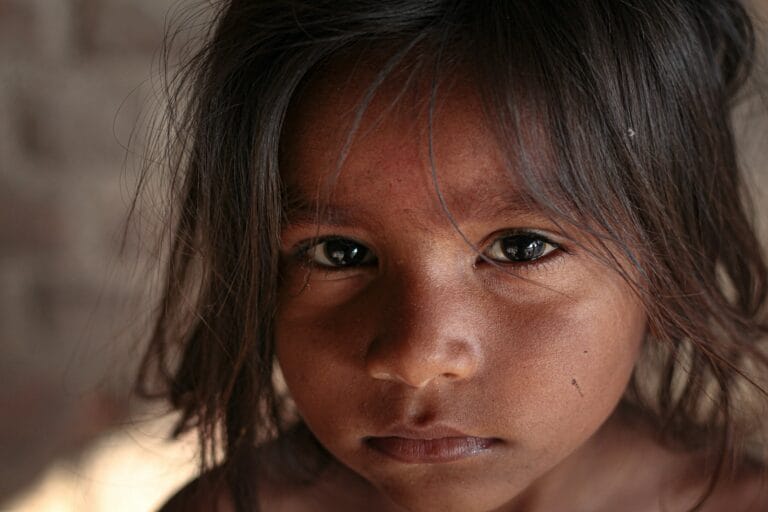
Let me destroy the most dangerous myth about human trafficking: the idea that you’ll recognize a trafficker when you see one.
You won’t.
Because the person trafficking humans might be the loving boyfriend who brings flowers. The family friend who offers to help with job placement. The successful businesswoman who owns the nail salon downtown. The pastor who runs the church employment program. The couple next door with the live-in nanny who never seems to leave the house.
Traffickers don’t look like movie villains. They look like us. They act like us. They exist in our communities, our churches, our families. And that’s exactly what makes them so effective.
If we’re going to fight human trafficking, we need to shatter every comfortable myth we believe about who traffickers are and how trafficking actually happens. Because the truth is far more disturbing than the Hollywood version, and it’s happening right under our noses.
The Myth We Desperately Want to Believe
Here’s the trafficking story most people imagine: a stranger in a white van kidnaps a child from a parking lot. International criminal organizations smuggle victims across borders. Dark, foreign places where terrible people do terrible things.
And yes, that happens. But it’s not the norm. It’s not even close to the norm.
The reality is this: There is no single profile of a human trafficker; their only commonality is that they are driven by profit at the expense of others. Traffickers are men and women of all ages. They can be relatives, romantic partners, or close family friends. [Insert U.S. Department of Homeland Security Blue Campaign link here]
Read that again. Relatives. Romantic partners. Close family friends.
The person trafficking you is more likely to be someone you know and trust than a stranger. They’re more likely to manipulate you with promises than to physically kidnap you. They’re more likely to be operating in your hometown than in some distant country.
Most trafficking happens close to home, by people who understand exactly how to exploit the vulnerabilities of those around them. And that’s what makes it so insidious.
The Real Profile of Traffickers
Let me give you the uncomfortable truth about who becomes a trafficker, based on data from thousands of prosecutions and investigations.
Of the 1,070 defendants charged with human trafficking offenses in U.S. district court in fiscal year 2022, 91% were male, 58% were white, 20% were black, 18% were Hispanic, 95% were U.S. citizens, and 71% had no prior convictions. [Insert Bureau of Justice Statistics Report link here]
Let that last statistic sink in: 71% had no prior criminal history. These aren’t career criminals with long rap sheets. These are “normal” people who made the decision to exploit other humans for profit.
But here’s where it gets even more complex. In 30% of the countries which provided information on the gender of traffickers, women make up the largest proportion of traffickers. In some parts of the world, women trafficking women is the norm. [Insert UNODC Global Report on Trafficking in Persons link here]
Women. Trafficking. Women.
That destroys another myth, doesn’t it? We want to believe trafficking is something men do to women. But the reality is far more complicated. Women recruit other women. Mothers exploit their own children. Female “madams” run brothels. Women work as enforcers in labor trafficking operations.
Evil is an equal opportunity employer.
The Many Faces of Traffickers
Human traffickers can be part of a transnational criminal organization, a local criminal network, or a gang. However, they can also be the owners of restaurant in the community, a local business offering janitorial services, a farm labor contractor supplying harvesters, or the couple next door with a live-in domestic worker or nanny.
Let me break down the actual types of traffickers operating right now:
The Intimate Partner Trafficker (Romeo Pimp)
This is one of the most common and most devastating forms of trafficking. A man (usually) targets a vulnerable woman or girl, showers her with attention and affection, makes her feel special and loved. He’s patient. He builds trust. He becomes her entire world.
Then, slowly, the exploitation begins. He needs money. She could help by doing this “just one time.” Or he introduces her to his “friend” who needs company. Or he frames prostitution as something they’re doing together, as a team, to build their future.
By the time she realizes what’s happening, she’s emotionally dependent, isolated from family and friends, and believes she chose this life. That’s the brilliance of this method: the victim blames herself instead of recognizing she’s been trafficked.
These traffickers are masters of psychological manipulation. They don’t need chains when they can control someone’s mind and heart.
The Family Member
Yes, you read that right. Parents trafficking their own children. Siblings exploiting siblings. Extended family members selling relatives into slavery.
Sometimes it’s driven by poverty and desperation. Parents in extreme financial situations make horrific choices to survive. But sometimes it’s pure exploitation and abuse, family members who view children or vulnerable relatives as commodities to be sold.
This is particularly devastating because the victim’s primary support system, the people who should protect them, are the ones perpetrating the abuse. Who do you run to when your family is trafficking you?
The Employer
Restaurant owners who bring workers from other countries and then confiscate their documents. Farm contractors who house workers in deplorable conditions and pay them nothing while claiming they’re “working off debts.” Factory owners who lock workers in during shifts and threaten deportation if they complain.
Domestic servitude is a massive form of labor trafficking. The couple who brings a young woman from another country to “help with housework” then takes her passport, doesn’t pay her, doesn’t let her leave the house, and threatens her if she tries to seek help.
These traffickers hide behind the veneer of legitimate business. They file taxes, they operate openly, they seem respectable. But behind closed doors, they’re enslaving human beings.
The Opportunistic Criminal
Street gangs that add trafficking to their portfolio of crimes. Organized crime syndicates that run trafficking operations alongside drug trafficking and money laundering. Local criminals who see trafficking as a low-risk, high-profit venture.
These traffickers are motivated purely by economics. They’ve calculated that trafficking is profitable and the chances of getting caught are relatively low. Victims are just inventory, bodies to be bought and sold for maximum return.
The Online Predator
This is the fastest-growing category of traffickers. They use social media to recruit victims. They advertise fake jobs on legitimate platforms. They groom children through online gaming and chat rooms. They sell access to victims through encrypted apps and the dark web.
Traffickers use technology to recruit, control, market and exploit vulnerable individuals while also evading detection. Traffickers do this, for example, by using the Internet to advertise and sell children online for sex, advertise false jobs on social media platforms that are actually human trafficking schemes, transfer cryptocurrency to other traffickers, and perpetuate online scam operations. [Insert U.S. State Department Trafficking in Persons Report link here]
Technology has made trafficking easier, faster, and more difficult to track. A trafficker can now recruit victims from the comfort of their home, never physically meeting them until the exploitation begins.
The “Legitimate” Professional
Corrupt officials who facilitate trafficking by falsifying documents or looking the other way. Lawyers who help traffickers exploit legal loopholes. Accountants who launder trafficking profits. Transportation workers who knowingly move trafficking victims.
These enablers may not consider themselves traffickers, but they’re essential to trafficking operations. Without their cooperation, many trafficking networks couldn’t function.
How Trafficking Actually Happens: The Methods
Traffickers use three primary methods to control their victims, and they’re experts at all three.
Force
This is what most people imagine: physical violence, threats, confinement, sexual assault. It’s the most obvious form of control and it absolutely happens. Victims are beaten, raped, locked in rooms, threatened with weapons.
But force is actually the least common method because it’s the most visible and therefore the riskiest for traffickers. Physical abuse leaves evidence. Visible injuries raise questions.
Fraud
This is far more common. Traffickers lie about the nature of the job, the working conditions, the pay, the location. They promise legitimate employment and deliver slavery. They advertise au pair positions that turn out to be domestic servitude. They offer modeling opportunities that lead to forced prostitution.
The victim thinks they’re making a choice, entering into a legitimate agreement. By the time they realize they’ve been deceived, they’re already trapped.
Coercion
This is the most insidious method because it’s psychological rather than physical. Traffickers use shame, fear, manipulation, and control to keep victims compliant.
They threaten to tell the victim’s family what they’ve “done.” They warn that police will arrest the victim instead of the trafficker. They exploit immigration status, threatening deportation. They create financial “debts” that can never be paid off. They isolate victims from anyone who might help.
They make victims feel responsible for their own exploitation. That’s the ultimate control: when the victim becomes their own jailer.
The Types of Trafficking Happening Right Now
Understanding who traffickers are requires understanding what they’re actually doing. Here are the primary forms of trafficking operating in 2025:
Sex Trafficking
The most common form of human trafficking (79%) is sexual exploitation. The victims of sexual exploitation are predominantly women and girls. [Insert UNODC Global Report on Trafficking in Persons link here]
This includes forced prostitution, pornography production, escort services, massage parlors, strip clubs, and online sexual exploitation. It happens in brothels, hotel rooms, truck stops, private residences, and on street corners.
Sex traffickers have adapted to technology brilliantly. They advertise victims online, use dating apps to recruit new victims, and live stream abuse for paying customers worldwide.
Labor Trafficking
The second most common form of human trafficking is forced labour (18%), although this may be a misrepresentation because forced labour is less frequently detected and reported than trafficking for sexual exploitation. [Insert UNODC Global Report on Trafficking in Persons link here]
This includes forced labor in agriculture, construction, manufacturing, domestic work, hospitality, and countless other industries. Victims work long hours in dangerous conditions for little or no pay, unable to leave because of physical, legal, or psychological control.
Labor trafficking is everywhere. The produce you buy might have been picked by trafficked workers. The clothes you wear might have been sewn by enslaved children. The hotel you stay in might employ trafficked housekeepers.
Domestic Servitude
This is a subset of labor trafficking but deserves special mention because it’s so hidden. Domestic workers are trafficked into private homes where they cook, clean, and care for children while being abused, unpaid, and unable to leave.
Because this happens behind closed doors in residential neighborhoods, it’s almost invisible. Your neighbor might be a trafficking victim and you’d never know.
Child Trafficking
Worldwide, almost 20% of all trafficking victims are children. However, in some parts of Africa and the Mekong region, children are the majority (up to 100% in parts of West Africa). [Insert UNODC Global Report on Trafficking in Persons link here]
Children are trafficked for sex, for labor, for domestic servitude, for criminal activity (like begging or theft), and in some regions for ritual purposes or forced marriage.
Children are uniquely vulnerable because they’re easier to control, less likely to seek help, and can be exploited for years before reaching adulthood.
Why People Become Traffickers
Understanding the psychology of traffickers is crucial to preventing trafficking. So why do people do it?
Profit.
Human trafficking generates an estimated $150 billion globally every year. It’s one of the most profitable criminal enterprises in the world, and in many jurisdictions, it carries lower penalties than drug trafficking. [Insert International Labour Organization report link here]
Power.
Some traffickers are motivated by the sense of control over another human being. The ability to dominate, to make someone completely dependent, to have absolute power over another person’s life.
Desperation.
In some cases, particularly with family members who traffic their own children, extreme poverty drives people to make unconscionable choices.
Opportunity.
Some people become traffickers simply because they can. They see vulnerable people around them and realize they could exploit that vulnerability for gain.
Socialization.
In some communities and families, trafficking is normalized. Children grow up watching parents traffic others and see it as a legitimate business.
None of these reasons excuse trafficking. But understanding motivation helps us develop prevention strategies and identify potential traffickers before they can harm others.
The Biblical Response to This Reality
If you’re a Christian reading this, you need to understand something: every trafficker is made in the image of God, and every trafficker needs redemption.
That doesn’t mean we excuse their crimes. It doesn’t mean we minimize the evil of what they’ve done. It means we recognize that Jesus died for traffickers too, and that only the transforming power of the gospel can truly address the darkness in the human heart that makes trafficking possible.
Romans 3:23 reminds us “all have sinned and fall short of the glory of God.” We’re all capable of terrible evil when we reject God and embrace sin. The trafficker is not fundamentally different from us; they’ve simply chosen to act on the darkness that exists in every human heart.
But Ezekiel 18:23 also promises: “Have I any pleasure in the death of the wicked, declares the Lord God, and not rather that he should turn from his way and live?” God desires the repentance even of traffickers.
Our responsibility is twofold: we must work to stop trafficking and bring traffickers to justice, AND we must pray for their repentance and redemption. Both justice and mercy matter to God.
How to Recognize Potential Trafficking Situations
Now that you know who traffickers actually are, you can start recognizing the warning signs. Watch for these red flags:
Someone who speaks for or controls another person, especially in situations where the controlled person could speak for themselves
Employers who house their workers in the same location where they work, especially if living conditions seem inadequate
Relationships that seem controlling or unbalanced, particularly age-gap relationships where the older partner makes all the decisions
Children or teenagers who seem to be with adults who aren’t their parents and can’t clearly explain the relationship
Businesses that seem to operate with workers who are always present but never seem to have time off or personal freedom
Social media job offers that seem too good to be true, especially those requiring travel or promising unrealistic earnings
Anyone who shows signs of control by another person: lack of personal belongings, inability to speak freely, frequent monitoring, lack of knowledge about their location
If you see these signs, don’t confront the potential trafficker. That could endanger the victim. Instead, call the National Human Trafficking Hotline at 0800 222 777 in South Africa and report what you’ve observed.
The Uncomfortable Truth About Demand
Here’s something that makes most people squirm: trafficking exists because we create demand for it.
Every person who pays for sex creates demand for sex trafficking. Every company that demands impossibly cheap products creates demand for labor trafficking. Every consumer who refuses to ask where their goods come from creates demand for exploitation.
We’re all part of the system that makes trafficking profitable. And until we address the demand side, supply will continue.
That means men must stop buying sex. Companies must prioritize ethical supply chains over profit margins. Consumers must be willing to pay more for products made without exploitation. Churches must address the pornography epidemic that fuels sex trafficking.
If we want to stop traffickers, we must eliminate the economic incentive that drives trafficking in the first place.
What You Can Do Right Now
Knowledge is worthless without action. Here’s what you need to do after reading this post:
First, examine your own life. Are you contributing to trafficking through your purchasing decisions? Your entertainment choices? Your silence?
Second, learn to recognize the signs. Download A21’s trafficking indicators guide and educate yourself on what to look for.
Third, if you suspect trafficking, report it. Call 0800 222 777 immediately. Don’t assume someone else will do it. Don’t wait until you’re certain. Report your suspicions and let professionals investigate.
Fourth, support organizations fighting trafficking. A21 is on the frontlines rescuing victims, prosecuting traffickers, and preventing exploitation. Your donation funds investigations, victim services, and prevention programs.
Fifth, spread awareness. Share this post. Talk about trafficking with your family, your church, your community. Break the silence that allows traffickers to operate with impunity.
Final Words: The Faces Behind the Crime
Traffickers are neighbors, family members, business owners, romantic partners, and trusted community members. They’re sophisticated, manipulative, and driven by profit at the expense of human dignity.
They don’t fit our comfortable stereotypes. They don’t operate in the ways we imagine. They’re far more ordinary and far more dangerous than we want to believe.
But when we understand who they really are and how they actually operate, we can start recognizing and stopping them. We can protect potential victims. We can interrupt trafficking networks. We can bring perpetrators to justice.
The myths about trafficking have protected traffickers for too long. It’s time to embrace the uncomfortable truth and do something about it.
Because somewhere right now, a trafficker is identifying their next victim. Someone vulnerable. Someone who doesn’t realize they’re being targeted. Someone who believes the promises being made.
Will we see it happening and stay silent? Or will we recognize the warning signs and intervene?
The next victim’s freedom might depend on your answer.
TAKE ACTION NOW
Suspect trafficking? Call the National Human Trafficking Hotline: 0800 222 777 (South Africa, 24/7)
Learn more: Download A21’s Trafficking Indicators Guide
Support the fight: Donate to A21’s Freedom Campaign
Spread awareness: Share this post with #RecognizeTrafficking #A21
Pray: For victims trapped in trafficking, for traffickers to be caught and convicted, and for the Church to wake up to this crisis.
The person being trafficked might be someone you know. The trafficker might be someone you trust. Learn the signs. Break the myths. Save a life. Check out the signs you are being trafficked.

John Thole is the voice behind Beyond Salvation, a blog that captures the highs and lows of life through faith, laughter, and honest reflection. With a passion for storytelling, technology, and spiritual growth, he creates content that resonates with seekers, believers, and anyone navigating life’s journey. Whether sharing personal insights, devotionals, or thought-provoking discussions, John aims to inspire, uplift, and spark meaningful conversations.